The short version: Oxidation is a chalky, dull layer that wax cannot fix. Wash the boat, remove old wax, cut the oxidation with a compound (start with a heavy cut only if it is badly chalky), refine with a medium compound and then a polish, and finish with wax or a sealant. Work in small sections, and stop if the color starts to look see-through.
On this page: What oxidation is What a finished correction looks like What you need Steps Which compound to use Mistakes to avoid Common questions
What oxidation is
Gelcoat is the hard, glossy outer layer of a fiberglass boat. UV light breaks down its surface over time, leaving a dull, chalky film. Wax can sit on top of it, but only cutting the film away restores the color and shine.
What a finished correction looks like
A full correction takes a dull, faded hull back to a deep, even gloss.
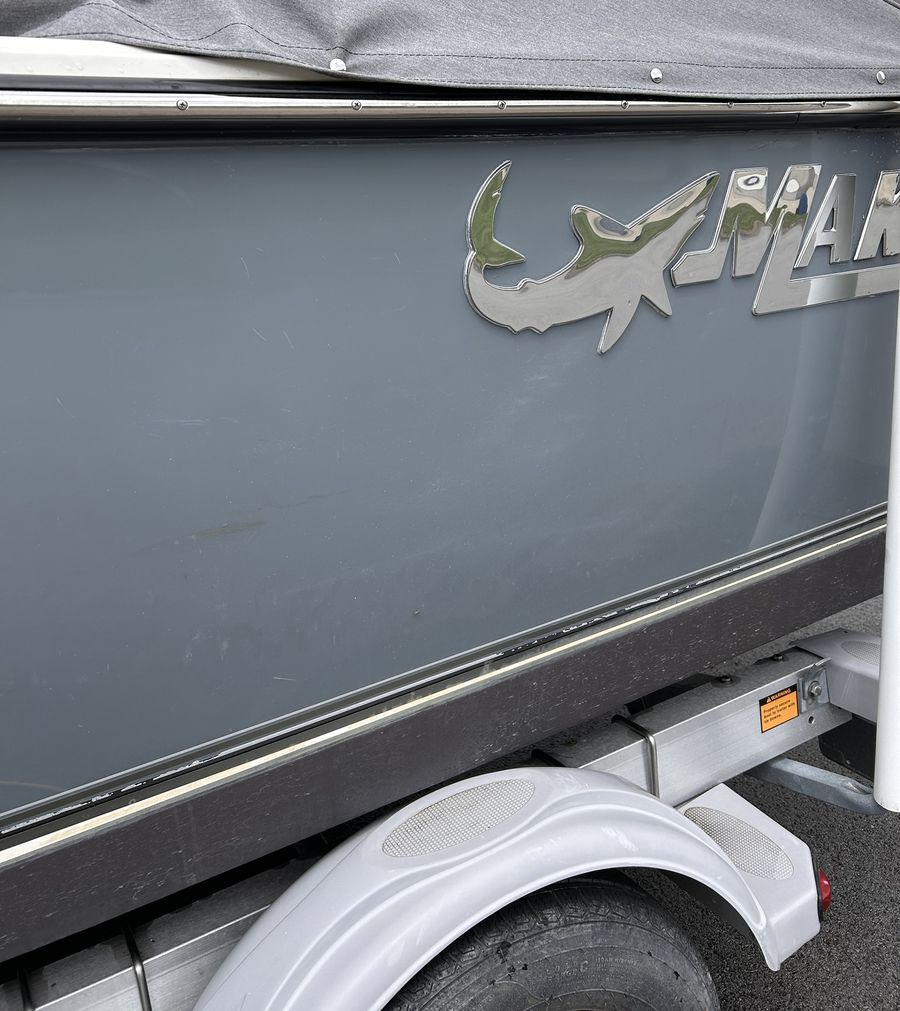
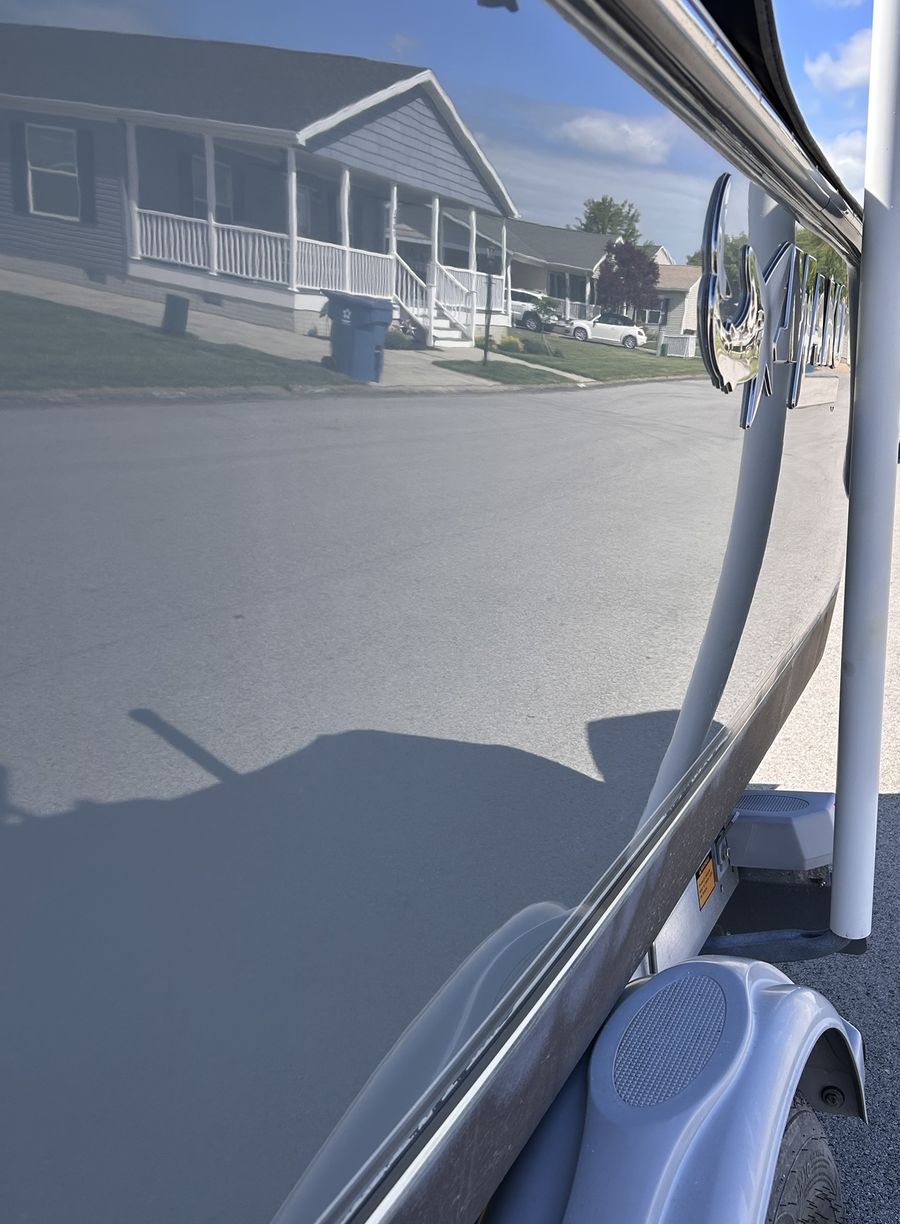
The same gray hull before and after a correction. In the after photo, the houses across the street reflect clearly in the gelcoat. Photos: Timmy Mohar.
What you need
- Boat wash soap
- A rubbing compound for the level of oxidation (heavy cut for chalky, medium cut for moderate)
- A polish to refine the finish
- For compounding: a rotary polisher with a wool pad. For polishing: a dual-action polisher with a foam pad or a soft wool polishing pad. See our tools and gear.
- Wax or a sealant to protect the result
- Painter's tape, microfiber towels
Steps
- Wash the boat and dry it with a chamois. You cannot polish a dirty surface.
- Remove old wax. Leftover wax can make a compound cut unevenly, according to BoatUS. A dish soap wash strips it, which is the one time dish soap belongs on a boat.
- Tape trim and edges. Compound slings everywhere.
- Start with the right compound. For severe, chalky oxidation, start with a heavy cut. For moderate oxidation, a medium cut may be enough. For light dullness, a polish may do it. Practical Sailor notes a heavily oxidized boat likely starts with a coarse compound and follows with a finer one.
- Work in small sections. Keep the pad moving and clean it often. Compounding removes gelcoat, so check your progress as you go.
- Stop if the color looks see-through. That means you are getting thin.
- Refine. Follow the heavy cut with a medium cut, then a polish, to remove swirls and bring back the gloss. We polish on a dual-action with either a foam pad or a soft wool polishing pad. Foam can sometimes leave a slight haze on gelcoat, so if you see haze after polishing with foam, finish with a soft wool pad. Some detailers polish with a rotary, which is faster but can leave swirl marks in less experienced hands.
- Protect. Without protection, oxidation returns quickly. Apply wax or a sealant.
Between every stage, wipe the area down and check everything. Look for spots that need another pass before you move to the next step.
Which compound to use
See our compounds and polishes page for heavy cut, medium cut, and finishing polish options.
Mistakes to avoid
- Working too big an area at once. The compound dries out before you finish, and the result is uneven.
- Not protecting it afterward. Freshly corrected gelcoat oxidizes again fast without wax or a sealant.
- Not cleaning the pad. A caked pad stops cutting and can leave marks. Clean it often.
- Waxing over oxidation
- Compounding over old wax
- Pressing hard or running one spot too long
- Skipping the polish after a heavy cut, which leaves swirls
More in mistakes that burn gelcoat.
Common questions
Do I need to sand?
Chalky oxidation needs wet sanding first for the best result. A really heavy cut compound can get you most of the way if you are not after perfection. Grit depends on how bad it is. Test a small spot first and start with the finest grit that removes the chalk, often 800 to 1000 for heavy oxidation, then step up through finer grits like 1500 and 2000 to smooth out the sanding marks before you compound. Go easy on edges, where it is easiest to sand through.
Can I do this by hand?
On a very small boat or a limited patch, yes. On anything larger it is exhausting and the result is less even.
How long will it last?
That depends on the protection you apply afterward and how the boat is stored. See our wax frequency guide.
If you buy through a link on this page, I may earn a commission at no extra cost to you. How that works. Last checked October 2026.

Timmy Mohar, Nautical Glow Marine
I run a boat detailing business in Southwest Florida and on the North Coast of Ohio. I have spent every year of my life around boats and taking care of them. About this site